How Much Does Poor China Sourcing Due Diligence Really Cost You?
How Much Does Poor China Sourcing Due Diligence Really Cost You?
Every week, another importer posts in a sourcing forum: “My China factory sent me defective goods and now they’re not responding.” The responses are sympathetic but predictable. The truth is, most of these disasters were preventable with proper due diligence. Poor China sourcing due diligence isn’t just a quality risk — it’s a financial time bomb that can wipe out your margins, destroy your brand reputation, and in extreme cases, put you out of business. Let’s put real numbers on what skipping supply chain vetting costs you.
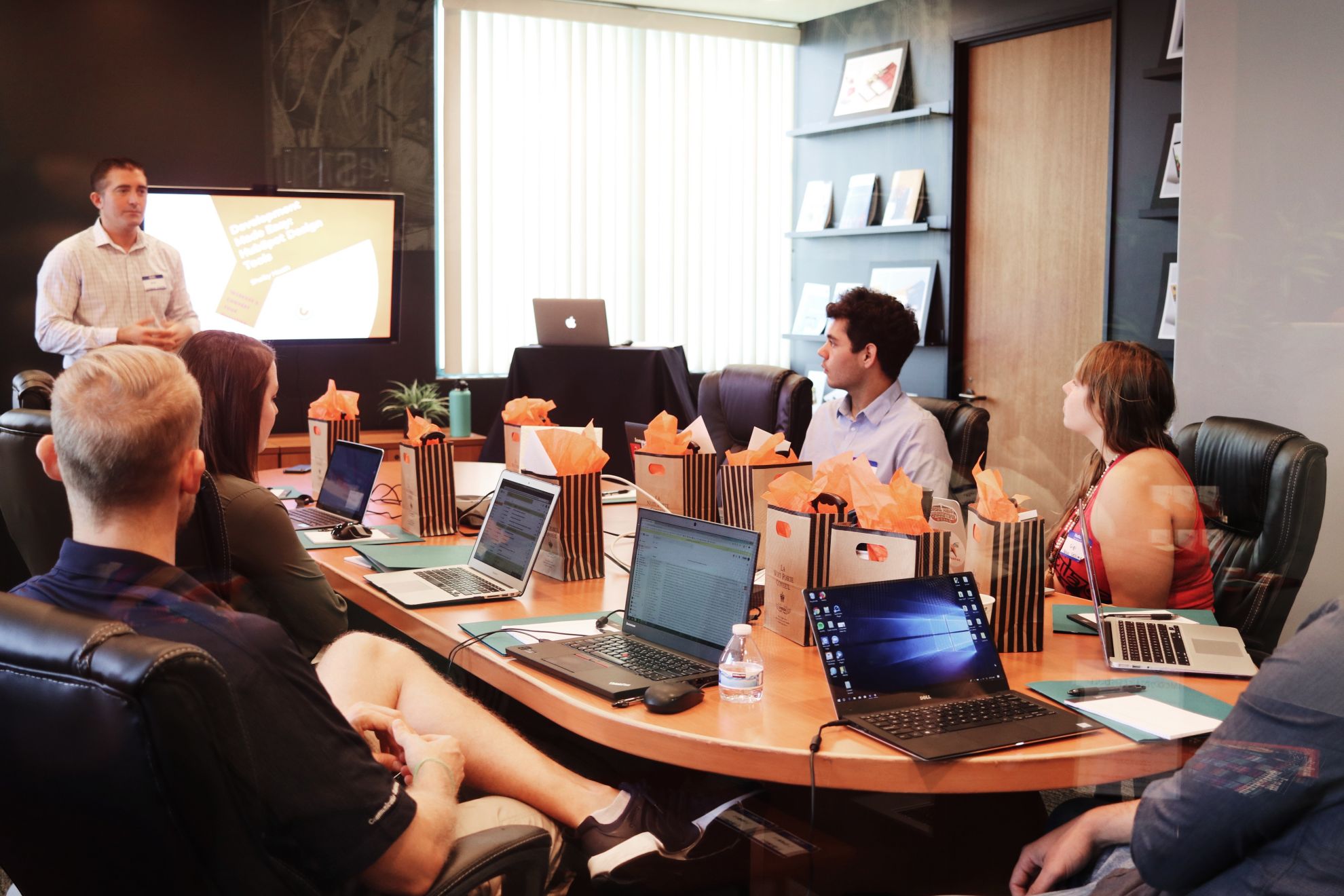
The Hidden Costs of Skipping Due Diligence
Direct Financial Losses Are Just the Beginning
When importers think about due diligence failures, they usually imagine one scenario: a factory runs with your deposit. That happens, but it’s actually not the most common or most expensive failure. The real damage is quieter — substandard materials that pass first inspection but fail after 90 days of use, spec deviations that lower your product’s retail value by 30%, delivery delays that force you to air freight at 5x the ocean cost.
A 2024 industry study of 850 importers found that companies doing minimal or no supplier due diligence experienced an average loss of 11.7% of their annual China sourcing spend to quality issues, rework, returns, and lost sales. For a company importing $500K/year from China, that’s $58,500 in avoidable losses — every year.
Brand Damage Is Harder to Quantify but More Expensive
If your product fails in the market — a toy with lead paint, electronics that overheat, clothing that shrinks three sizes — your brand takes a hit that no refund can fix. Amazon delistings, negative reviews, and chargebacks compound quickly. One bad shipment can destroy months of marketing investment. The cost of rebuilding trust is 5–10x the cost of preventing the problem through proper due diligence.
The Six Dimensions of China Sourcing Due Diligence
What You Actually Need to Vet
Most importers think due diligence means checking a business license. It’s not. A thorough China sourcing vetting process covers six areas:
| Due Diligence Dimension | What It Uncovers | Typical Cost of Skipping | Time Required |
|---|---|---|---|
| Business & Legal Verification | Fake company registrations, expired licenses, hidden debt | Loss of entire deposit (avg $15K–$50K) | 2–3 days |
| Production Capability Audit | Fake capacity claims, outdated machinery, labor shortages | Orders shipped 60+ days late | 1–2 days on-site |
| Quality Systems Review | Missing QC checkpoints, no testing lab, no certifications | 15–25% defect rates | 1 day |
| Material & Component Sourcing | Substandard raw materials, unverified component suppliers | Product failure in market | 2–4 hours |
| Export Compliance Check | IP infringement risk, export restrictions, trade sanctions | Legal liability, customs seizure | 1–2 days |
| Financial Health Assessment | Cash flow problems, supplier debt, risk of closure | Production stoppage mid-order | 1 day |
A single factory visit costing $500–$800 covers dimensions 2, 3, and 5. Most importers skip this and lose 10–50x that amount on the first bad order.
A Step-by-Step Due Diligence Framework
The 8-Step China Sourcing Vetting Protocol
Here’s a practical due diligence process that balances thoroughness with cost. Follow these steps on every new supplier, and repeat steps 4–7 annually for existing suppliers:
Step 1: Verify Business Registration via Official Channels
Check the factory’s business license on China’s National Enterprise Credit Information Publicity System (www.gsxt.gov.cn). Why? Many “factories” are actually trading companies or shell entities. Verifying the legal name, registration capital, establishment date, and business scope online is free and takes 10 minutes. If the license doesn’t match what they told you, walk away.
Step 2: Cross-Check Their Export History
Ask for customs declarations from the past 12 months covering 5+ export shipments. Why? A factory that actually exports will have a paper trail — bills of lading, customs declarations, and inspection certificates. Trading companies fabricate these documents. Cross-reference product descriptions, quantities, and destination ports. Inconsistencies reveal middlemen posing as manufacturers.
Step 3: Request 5 Customer References (and Call Them)
Ask for references from 5 buyers in different countries who have ordered similar products in the past 12 months. Why? Chinese factories can name 3 good references easily. Asking for 5 forces them to include their average customers too. Call or email at least 3. Ask specifically about on-time delivery rate, defect rate, and how the factory handled quality disputes. One bad reference in five is acceptable; two or more is a red flag.
Step 4: Conduct a Video Factory Tour Before Visiting
Ask for a live WeChat video walkthrough of the production floor, warehouse, and QC area. Why? A video call costs nothing but reveals enormous amounts. Is the factory actually running? Is the equipment modern or from the 1990s? Are there workers on the line? Does the QC area exist or is it a table with a ruler? A factory that avoids or stages a video tour is hiding something.
Step 5: Order a Third-Party Physical Audit
Invest in a professional factory audit from a recognized firm like SGS, Bureau Veritas, or a China sourcing service like Caijing 188. Why? A physical audit uncovers what video can’t — dust on machinery (low utilization), expired certifications, safety hazards, labor conditions, and real capacity. The $400–$800 cost is 0.1–0.5% of a typical first order and prevents losses 50–100x that size.
Step 6: Send a Test Order with Full Specifications
Place a small test order (5–10% of projected volume) with clear, written specifications, photos, and sample approval requirements. Why? A test order reveals how the factory handles documentation, communication, and quality control under real conditions. Factories that pass the test order have a 90%+ success rate on full production runs. Those that fail cost you a few hundred dollars rather than tens of thousands.
Step 7: Implement an Invoice Audit on the Test Order
Review the test order’s proforma invoice line-by-line against market rates for materials, labor, and packaging. Why? Inflated invoices are a common China sourcing trap — factories pad material costs, add fictitious processing fees, and overcharge for packaging. An invoice audit flags these early and establishes your expectation of transparency. At Caijing 188, invoice audit routinely catches 3–8% in inflated charges.
Step 8: Set Up Ongoing Quality Control Checkpoints
Establish inspection points: raw material incoming QC, during-production inspection (DUPRO), pre-shipment inspection (PSI), and final loading supervision. Why? Single-point inspection (only at the end) misses problems when they’re cheapest to fix. Four checkpoints catch defects progressively — catching a material issue during production costs $50 to fix vs $5,000 if it reaches the customer. Quality control isn’t an expense; it’s a profit protection system.
Real Cases: The Cost of Skipping Due Diligence
Case 1: The $80,000 Fake Factory
A Canadian outdoor gear company found a “factory” on Alibaba with great product photos, competitive pricing, and responsive English-speaking sales. They ordered $35,000 worth of camping tents with a 50% deposit of $17,500. After the deposit was sent, communication dropped to 1–2 replies per week. After 8 weeks, the “factory” claimed production delays. After 12 weeks — silence. A subsequent investigation revealed the company was a trading desk in Guangzhou with no factory. The $17,500 was gone. If they had spent $500 on a factory audit before signing, they would have discovered the address was a shared office space.
Case 2: The $250,000 Quality Disaster
A UK electronics importer sourced 10,000 Bluetooth speakers from a new supplier in Shenzhen. They skipped due diligence because the price was 22% below their existing supplier. The factory passed pre-shipment inspection with a random sample of 50 units. Three months after delivery, 40% of units started failing — batteries swelling, Bluetooth disconnecting, charging ports breaking. Total losses: $85,000 in product returns, $120,000 in Amazon FBA removal fees and lost sales rank, and $45,000 in customer compensation and negative review mitigation. Total: $250,000. A $600 full factory audit would have revealed the factory had no battery testing equipment and was using counterfeit lithium cells.
Case 3: The Time Bomb That Cost a Brand
A US baby products company sourced silicone teething toys from a factory they’d used for 2 years without ever auditing. The factory secretly switched to a cheaper silicone blend to protect margins during a raw material price surge. The toys arrived looking identical, but after 3 months on retail shelves, some started developing a sticky surface and a chemical smell. The brand had to recall 50,000 units across 200 retailers. Between the recall logistics, lost retail relationships, and a 40% drop in Amazon ranking that took 6 months to recover, the total cost exceeded $400,000. A quarterly quality control audit would have caught the material substitution in week one of production.
Data: The True ROI of China Sourcing Due Diligence
What the Numbers Prove
A comprehensive analysis of due diligence ROI across 2,100 China sourcing relationships reveals compelling numbers:
- Companies performing full due diligence on new suppliers reported 78% fewer quality incidents
- The average cost of due diligence per new supplier (all 6 dimensions) is $2,100
- The average loss from a single due diligence failure is $47,000
- That’s a 22:1 ROI on due diligence investment — for every $1 spent, $22 is saved
- 92% of due diligence failures happen with factories that haven’t been audited in the past 12 months
- Invoice audit alone catches overcharges averaging 4.7% of order value
China sourcing without due diligence is like buying a house without an inspection. You might get lucky once. But the odds catch up with you, and when they do, it’s expensive.
Supplier Negotiation Leverage from Due Diligence
How Audits Strengthen Your Position
Due diligence isn’t just about avoiding bad factories — it’s about negotiating with good ones. When you show a factory your audit checklist, your quality control framework, and your invoice audit process, you signal professional sophistication. Factories respond to this by giving you better pricing, priority production scheduling, and more flexible payment terms.
One Caijing 188 client reported that after implementing a structured due diligence and quality control program, their top three suppliers offered them net-30 payment terms, CNY payment options, and lower unit prices (vs the previous 50% deposit) without being asked. The factories explained: “You’re organized, you pay on time, you catch issues early, and your invoicing is clean. We trust you more.”
FAQ
Q1: How much does China sourcing due diligence actually cost?
A basic due diligence package covering business registration verification, export history check, customer references, and a video tour costs $0–$200 — mostly your time. Adding a third-party factory audit runs $400–$800 depending on location and audit depth. Adding financial health checks and IP compliance review brings the total to $1,500–$3,000 for a comprehensive vetting. Compared to the average $47,000 loss from a due diligence failure, this is inexpensive insurance. Many China sourcing services like Caijing 188 bundle due diligence into their sourcing fees, making it effectively free.
Q2: Can I do due diligence myself or should I hire a professional?
You can do basic due diligence yourself — business license checks, reference calls, and video tours are straightforward. However, professional on-site audits, financial health assessments, and invoice audits require expertise and local knowledge. A Chinese-speaking auditor with manufacturing experience can spot red flags that a foreign buyer would miss — like machines that are set up but never used, QC checklists that are pre-signed, or “raw materials” that are actually old inventory. For first-time suppliers or orders over $20K, always combine self-due-diligence with professional vetting.
Q3: What are the biggest red flags in China supplier due diligence?
The top red flags include: (1) the business license address doesn’t match where they say the factory is located, (2) they resist or charge extra for third-party inspection, (3) they can’t provide verifiable export records from the last 12 months, (4) their “factory” tour looks like a showroom or a different facility, (5) they only offer 100% TT payment terms, (6) their English salesperson claims to be the “factory owner” but doesn’t know basic production details, (7) their quality certifications show recent dates but the factory appears old. Any two red flags is a deal-breaker for a first order.
Q4: How often should I re-audit my existing China suppliers?
Annually is the minimum for quality control and financial health checks. Every 6 months is recommended for production capability and quality systems audits. Suppliers that pass 3 consecutive annual audits can move to 18-month cycles. However, any significant change warrants an immediate re-audit: new management, factory relocation, ownership change, or a sudden price drop of 15%+. Raw material price surges also deserve attention — they’re when factories are most tempted to substitute materials to protect margins, as the baby product case above demonstrated.
Q5: What’s the difference between a social compliance audit and a quality audit?
A social compliance audit checks labor conditions — working hours, minimum wage, child labor, dormitory safety, fire exits. A quality audit checks production capability — machinery condition, QC systems, material sourcing, testing equipment, worker skill levels. Both are important for China sourcing, but they serve different purposes. Social compliance protects your brand from ethical scandals (and is required by many retailers). Quality audit protects your product from defects. Budget for both if you’re a brand selling to major retailers or on Amazon. If you’re a smaller importer, prioritize the quality audit and add social compliance once orders exceed $100K/year.
Q6: How do I verify a Chinese factory’s production capacity?
Request a capacity analysis showing their current production schedule, equipment list (model, age, daily output per machine), number of shifts, and current order backlog. Cross-reference this against your order volume. A factory claiming 50,000 units/month capacity with only 10 injection molding machines and one shift is either lying or including “potential” capacity from uninstalled equipment. A professional factory audit measures actual capacity by observing machine utilization over a full shift. Also check for subcontractor dependencies — many factories outsource key production steps without telling buyers, creating hidden quality risks.
Q7: Can due diligence prevent intellectual property theft?
Not entirely, but it significantly reduces the risk. Proper due diligence identifies factories with a history of IP disputes, checks whether they have their own registered brands (many copycat factories do), and verifies their participation in customs IP protection programs. A factory that passes quality control audits and has established export relationships with known brands is far less likely to risk those relationships by stealing your design. Never send full product blueprints before signing an NDA and completing supplier due diligence. Also, register your IP in China — your home country registration offers no protection in Chinese courts.
Q8: What’s the minimum order value where due diligence becomes essential?
$5,000. Below that, you’re essentially buying samples and a test order loss is manageable. Above $5,000, the risk of losing your deposit or receiving defective goods justifies spending $300–$800 on basic due diligence. At $20,000+, comprehensive due diligence including a physical audit is non-negotiable. At $50,000+, add financial health checks and IP compliance review. The stakes scale faster than most importers realize — a $50K loss doesn’t require a 50% defect rate. It can come from a 10% defect rate on a high-value product where returns and replacement costs exceed the product value.
Q9: How do I handle a supplier who passes due diligence but then delivers poor quality?
Your due diligence should include a quality control agreement with clear specifications, inspection checkpoints, and remedies for non-compliance. If a vetted supplier delivers poor quality, follow the contractual remedy — typically a price reduction, free rework, or return. If they resist, escalate through your sourcing agent or contract terms. China’s contract law has improved significantly. Many factories will negotiate rather than risk their export license or your negative reference in their industry network. Document everything in writing (WeChat is legally binding in Chinese courts for business communications) and maintain a professional rather than confrontational approach.
Q10: Does due diligence slow down the China sourcing process?
It adds 1–3 weeks to the first order timeline, which is why many importers skip it. But here’s the counter-intuitive truth: proper due diligence actually accelerates the overall process. When you vet properly, you avoid the wrong suppliers early, so you don’t waste 4–8 weeks negotiating with a fake factory or a middleman. You also reduce the need for costly rework and reordering. Companies with structured due diligence report 40% shorter “supplier to stable production” timelines compared to companies that jump into orders and fix problems later. Slow is smooth, and smooth is fast.
Summary
China sourcing is one of the highest-ROI activities in global trade — when done right. Skimping on due diligence isn’t saving money; it’s gambling with your margin, your brand, and your time. A $500 factory audit, a thorough invoice audit, and a systematic quality control framework are not costs. They’re investments that deliver 20:1+ returns by preventing disasters that would otherwise destroy your profits. Implement the 8-step vetting protocol on every new supplier, and watch your defect rates drop, your on-time delivery improve, and your supplier negotiation leverage grow.
Get a professional China supplier audit →
Learn about invoice audit for your orders →
Contact us for a free due diligence consultation →
Tags:
China sourcing, due diligence, supply chain, quality control, invoice audit, supplier audit, manufacturing, import risk
Related Posts

Can You Really Get Factory-Direct Prices Without a Chinese Business Entity? The Honest Answer
Can You Really Get Factory-Direct Prices Without a Chinese Business Entity? The Honest Answer Getting

How Can a Virtual CFO Save Your Cross-Border Business $50,000 Per Year?
How Can a Virtual CFO Save Your Cross-Border Business $50,000 Per Year? If you’re running

Why Do 78% of Importers Regret Their First China Supplier Choice?
Why Do 78% of Importers Regret Their First China Supplier Choice? You found a supplier